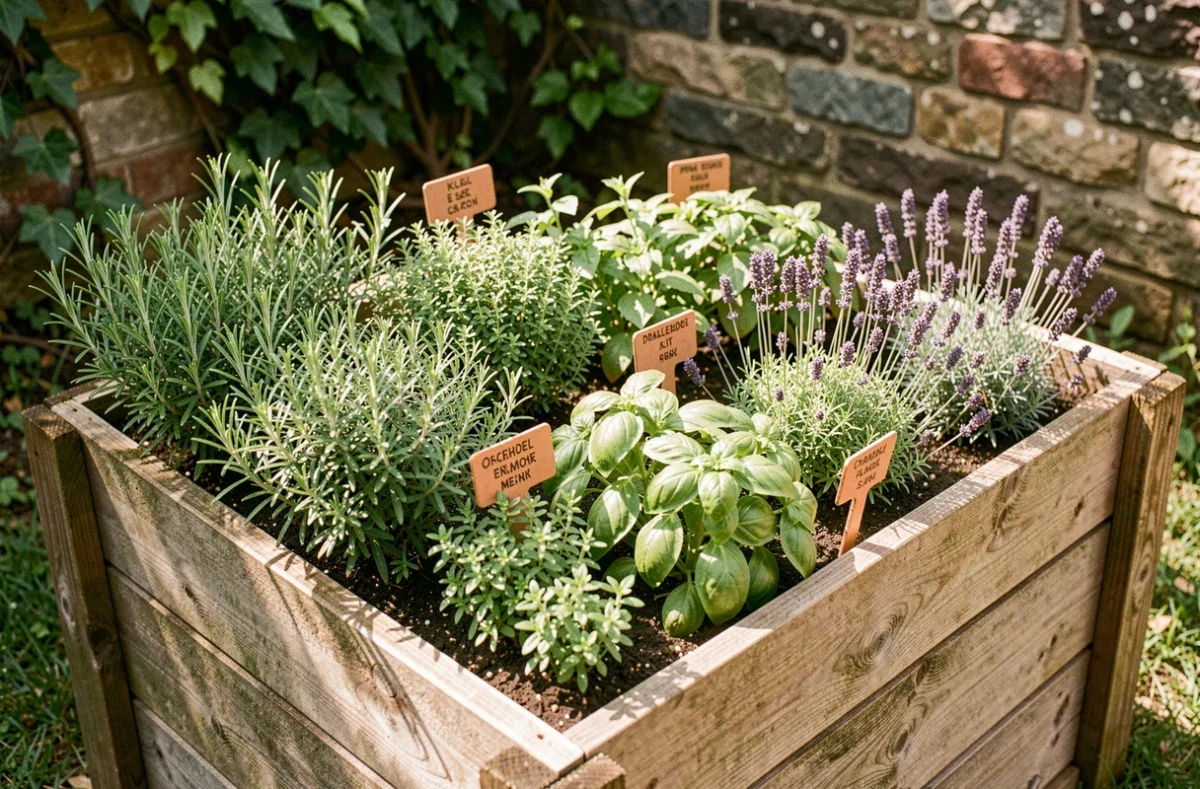
Setting up an aromatic garden involves balancing often underestimated constraints: exposure, soil type, regulations on maintenance products, and compatibility between species. Before choosing between thyme, basil, or parsley, it is essential to assess what each configuration (in-ground, pot, balcony) truly demands in terms of results and efforts.
Comparative needs of aromatics based on exposure and soil
Not all aromatic plants thrive under the same cultivation conditions. Grouping species with opposing requirements in the same container or plot leads to predictable failures. The table below helps visualize the differences.
| Plant | Exposure | Soil Type | Watering |
|---|---|---|---|
| Thyme | Full sun | Well-drained, poor, dry | Low |
| Rosemary | Full sun | Porous, limestone tolerated | Low |
| Basil | Full sun, warmth | Rich, cool | Regular |
| Parsley | Partial shade to sun | Rich, moist | Regular |
| Chives | Sun to partial shade | Cool, humus-rich | Moderate |
| Mint | Partial shade | Cool, rich | Regular |
Thyme and rosemary belong to the group of “sun herbs,” sometimes referred to as herbs from Provence. They tolerate drought and poor soils. In contrast, parsley and mint require cool soil and some shade.
This table highlights a principle often overlooked: grouping aromatics by water needs avoids half of the failures. Planting basil next to thyme, in the same dry substrate, dooms one of the two.
To delve deeper into associations and possible configurations, the work of designing the site Le Jardin D’Épices offers concrete ideas tailored to different spaces.
Regulatory constraints that change the maintenance of the aromatic garden
The maintenance of an aromatic space has changed its legal framework in recent years, and several common practices are now prohibited.
Pesticides banned for individuals
Since January 1, 2019, the purchase and use of pesticides are prohibited for individuals. Only biocontrol products, those with low risk, or those usable in organic farming remain authorized. Since July 1, 2022, this ban also covers the outdoor spaces of private properties.
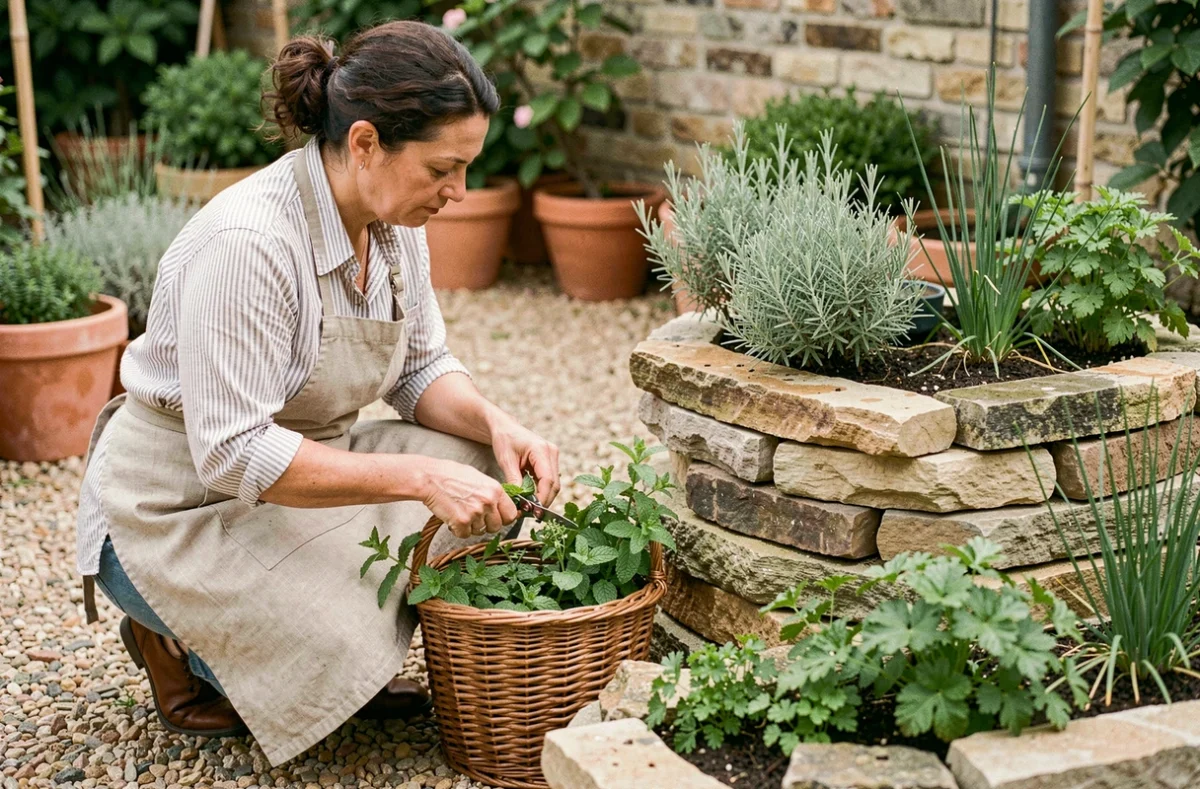
For an aromatic garden, this means that traditional chemical weeding is no longer an option. Mulching, manual hoeing, and biocontrol solutions are the only legal means to keep the plots clean.
Invasive exotic plants to exclude from the decor
When setting up an aromatic garden, ornamental plants are often integrated around the herbs to structure the space. Pampas grass (Cortaderia selloana), long popular, has been on the list of prohibited invasive exotic species in mainland France since April 7, 2023. Its possession, sale, and transport are prohibited. The grace period granted to professionals ended on September 1, 2024.
For invasive plants already present, composting fragments that can regrow is not recommended. Recommendations suggest disposal to an appropriate green waste channel.
Container, in-ground, or balcony setup: differences in yield and constraints
The choice of container is not just a matter of available space. It determines the frequency of watering, the longevity of the plants, and the possible diversity.
- In-ground cultivation offers the best rooting and the greatest water autonomy. Perennials (thyme, rosemary, chives) thrive there for several years without repotting. The soil needs to be prepared initially, but maintenance decreases over time.
- Potted or container gardening is suitable for balconies and terraces. It requires more frequent watering, as the substrate dries out quickly. A pot that is too small limits root growth and reduces foliage production. Containers must have effective drainage.
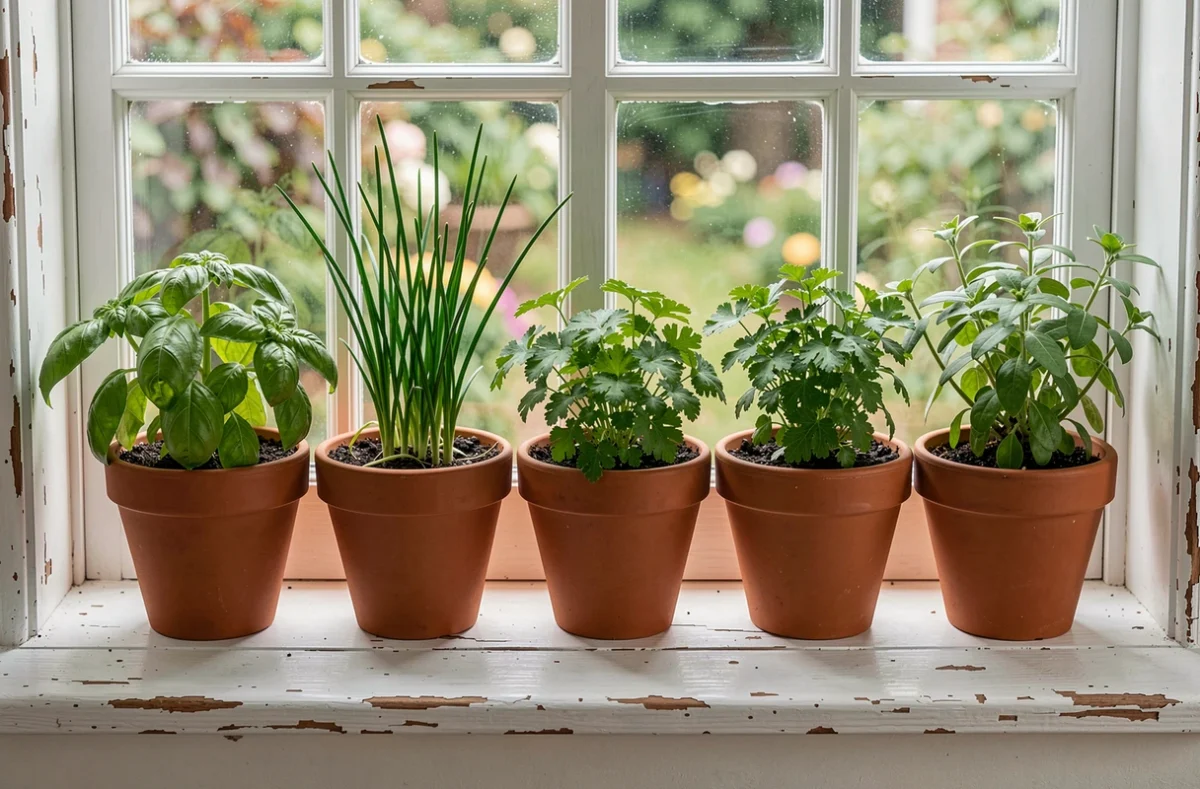
- Indoor cultivation (windowsill, kitchen) is limited to species that are not demanding in light. Basil and parsley tolerate this setup as long as they receive several hours of direct light per day. The yield remains lower than that of outdoor cultivation.
Mint deserves a special mention: it must be isolated in a pot even when planted in the ground. Its rhizomes quickly colonize the space and suffocate neighboring species. A pot buried in the soil, without lateral drainage holes, is the most reliable solution.
Aromatic associations: compatibilities and incompatibilities to know
Associating aromatics is not limited to grouping those with the same water needs. Some interactions modify the growth or flavor of neighboring plants.
Basil and tomato form a classic duo in the aromatic vegetable garden. Their needs for rich soil, warmth, and regular watering coincide. Chives integrate well near carrots and parsley, in a partially shaded area.
Conversely, fennel does not associate well with most aromatics and vegetables. It secretes substances that inhibit the growth of many neighboring plants. Reserving a separate space for it avoids disappointments.
Savory and beans get along well. Rosemary and sage coexist without difficulty, as they share the same requirements for well-drained soil and sun exposure.
Planning these associations before planting, rather than reorganizing afterward, avoids unnecessary losses. A simple sketch, even on paper, is enough to identify incompatibilities and optimize the available space.
The most productive aromatic garden is not the one that contains the most species, but the one where each plant occupies a place consistent with its actual needs. Three or four well-positioned aromatics will yield more than a dozen poorly associated ones, maintained with unsuitable methods or planted in an inappropriate substrate.