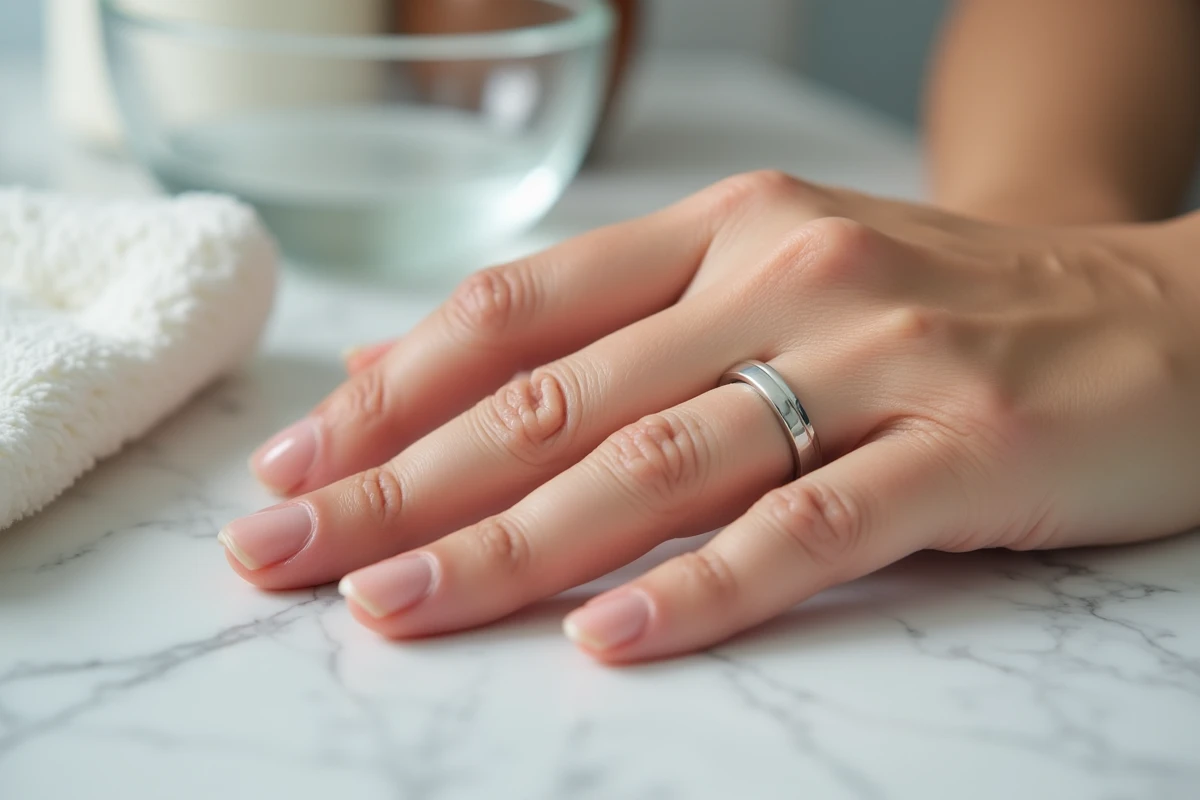
After a few months of daily wear, the skin under a ring often retains a pale line or a slightly colored area. This mark left by a ring on the skin can be a simple indentation due to pressure, a green stain related to metal oxidation, or a more stubborn hyperpigmentation. Before seeking cosmetic solutions, it’s worth understanding what is actually happening at the skin level.
Micro-edemas and circulation: the cause that jewelry articles do not address
Have you ever noticed that the mark of your ring seems deeper in the morning upon waking? It’s not just a matter of mechanical friction. The skin on the finger, thin and highly vascularized, reacts to volume changes related to water retention and nocturnal micro-edemas.
The continuous wearing of a ring slightly compresses the tissues. The mark may signal an early circulatory disorder, not just prolonged contact with the metal. If the indentation remains swollen, red, or painful several hours after removing the ring, a medical opinion can rule out a venous or lymphatic circulation problem.
To find out how to reduce a ring mark taking these factors into account, one must first distinguish a simple mechanical imprint from a deeper skin reaction. A mechanical imprint disappears within a few hours without intervention. Persistent hyperpigmentation or irritation requires targeted care.

Niacinamide and azelaic acid: dermatological actives for stubborn marks
When the ring mark leaves a darker area than the rest of the finger, it is referred to as post-inflammatory hyperpigmentation. The skin has reacted to repeated friction as it would to a small wound, producing an excess of melanin.
Niacinamide on friction spots
Niacinamide (vitamin B3) slows the transfer of melanin to the upper layers of the skin. When applied locally to the marked area, it gradually reduces the discoloration over a few weeks. It can be found in common serums sold in pharmacies.
A niacinamide serum should be applied morning and evening on clean skin, directly on the mark, before moisturizing cream. There’s no need for an expensive product: the concentration to look for is around a few percent of niacinamide in the ingredient list.
Azelaic acid for more pronounced cases
Azelaic acid acts on the same mechanisms, with a complementary anti-inflammatory effect. In dermatology, it is used to treat more resistant hyperpigmentations. If the brown spot persists despite several weeks of niacinamide, a dermatologist may recommend a cream containing azelaic acid.
These two actives are documented for pigment spots, but rarely mentioned in the specific context of ring marks. They are, however, a much more suitable response than lemon or baking soda often recommended online.
Wearing connected rings: new types of marks
Connected rings (like the Oura Ring or smart sleep tracking rings) pose a specific problem. Their thickness, material, and especially continuous wear, including at night, accentuate the grooves and areas of hyperkeratosis on the finger.
User communities and manufacturers have converged on a few concrete recommendations:
- Change the ring from finger to finger once or twice a week to distribute pressure and prevent a single groove from deepening
- Remove the connected ring during sports when fingers swell from exertion and heat
- In case of persistent redness, suspend night wear for a few days to allow the skin to recover
These simple gestures significantly reduce the formation of lasting marks. They also apply to wedding bands worn continuously.
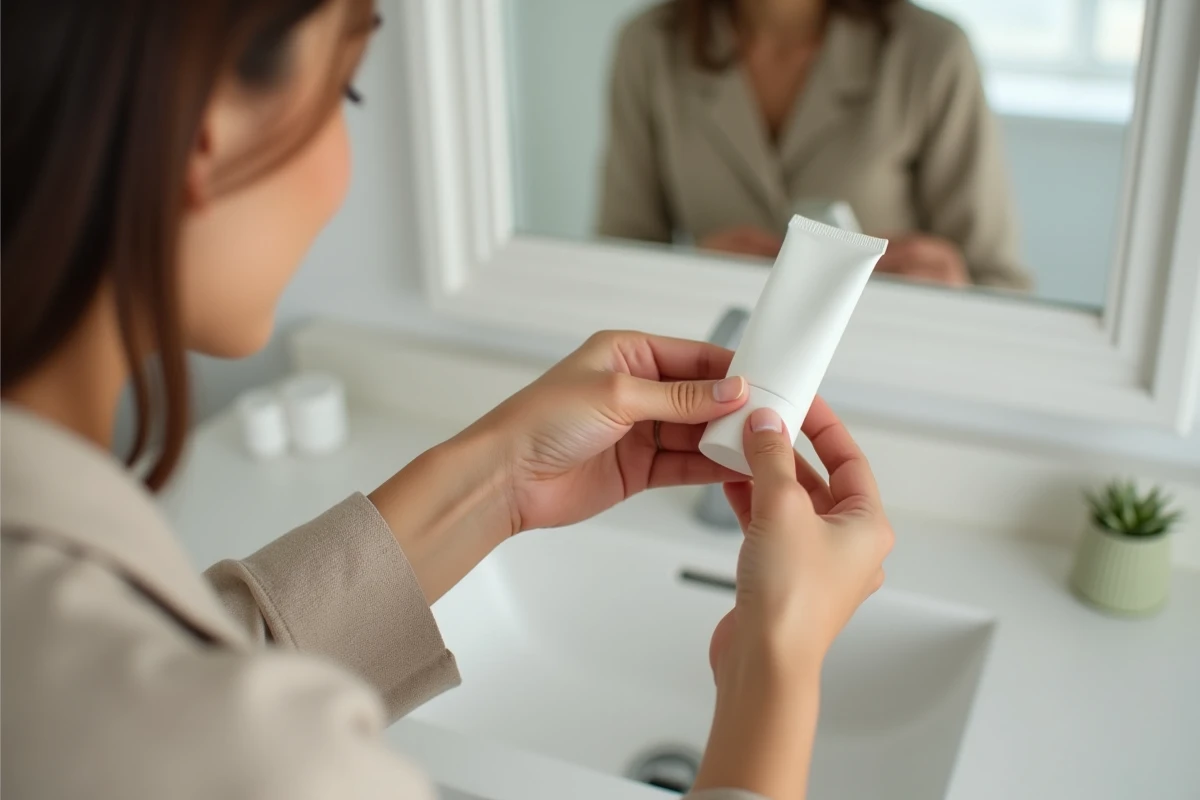
Care protocol for red or thickened marks
Some ring marks go beyond the stage of a simple imprint. The skin can become thickened, red, and sometimes itchy. In dermatology, these lesions are treated as mild friction wounds.
Emollients rich in ceramides
The first reflex is to apply a repairing emollient rich in ceramides to the irritated area. Ceramides restore the skin barrier damaged by friction. A daily application after removing the ring (in the evening, for example) is sufficient in most cases.
Topical corticosteroids for short courses
If the area remains red, thickened, or itchy after two weeks of emollient care, a doctor may prescribe a low-strength topical corticosteroid for a short course. A low-strength topical corticosteroid calms inflammation within a few days. This type of treatment should not be used for prolonged self-medication.
Preventing the mark rather than treating it
Prevention remains more effective than correction. A few habits limit the formation of deep marks:
- Remove the ring or wedding band at night, especially if fingers tend to swell during sleep
- Apply a thin layer of emollient under the ring during warm periods to reduce direct friction
- Regularly clean the inner face of the ring with a soft cloth and warm water to remove soap or sweat residues that irritate the skin
- Check that the ring size is correct: a ring that is too tight digs a groove faster than a properly fitted model
For copper alloy rings that leave a green mark, a clear food-safe varnish applied to the inner face of the jewelry creates a barrier between the metal and the skin. This protective layer wears off over time and should be reapplied regularly.
The mark left by a ring on the skin is not a fatality. A light mechanical imprint disappears on its own after removing the jewelry for a few hours. More stubborn hyperpigmentation responds well to actives like niacinamide. And when the skin shows signs of real irritation, a ceramide emollient is the first appropriate step before consulting if necessary.