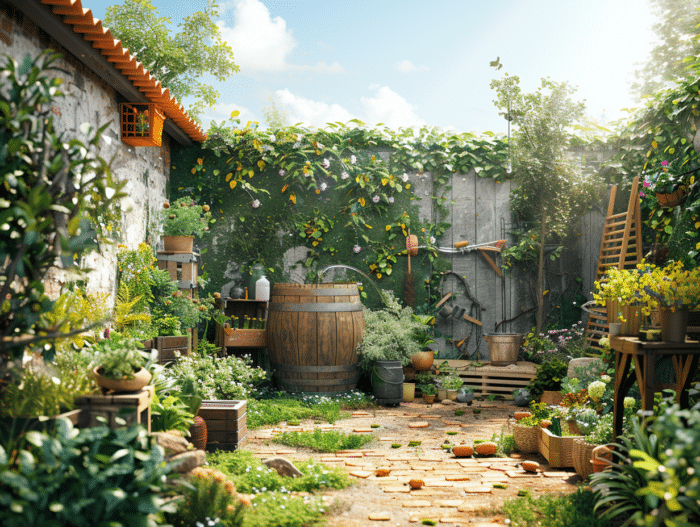
In a world where ecological awareness is becoming increasingly important, gardening enthusiasts are looking to combine financial savings with environmental respect. Cultivating one’s garden while minimizing impact on the ecosystem and reducing costs is becoming an achievable goal. This involves using methods and resources that promote biodiversity and preserve soils. Recycling organic waste to create compost, collecting rainwater for irrigation, or selecting disease-resistant native plants that can withstand climate variability are examples of approaches adopted by gardeners mindful of their ecological footprint.
Strategies for Economical and Environmentally Friendly Gardening
Sustainable gardening revolves around practices that contribute to both biodiversity preservation and resource optimization. Composting is one of the pillars of this model: by valuing organic waste, it produces a natural fertilizer that enriches the soil at no financial cost and without resorting to chemical fertilizers, which are often harmful to the environment. Choosing native plants suited to local climatic conditions significantly reduces maintenance and watering needs, thereby decreasing water usage, a vital resource that is increasingly constrained.
Regarding soil moisture conservation and crop protection, natural mulching proves to be an essential technique. Not only does it limit water evaporation, but it also helps regulate soil temperature and prevent weeds. For those wondering where to find mulch for free, there are many solutions: grass clippings, fallen leaves, shredded branches, or agricultural straw are often available at no cost from local communities or farmers engaged in green waste recycling.
Implementing a rainwater harvesting system represents a cost-effective and ecological strategy for garden irrigation. Devices such as ollas allow for slow and steady water distribution directly to the roots of plants, promoting substantial water savings. The integration of beneficial insects in the garden and the practice of companion planting also contribute to a healthy garden ecosystem, reducing the need for chemical interventions and enhancing crop resilience against pests.
Choosing and Using Sustainable Resources for an Ecological Garden
The wise choice of sustainable resources is a crucial link in the chain of ecological gardening. Ecological irrigation, for example, involves innovative techniques such as using ollas, clay pots that, when buried, allow for slow water diffusion, thus reducing waste and ensuring a notable water economy. This sustainable watering system precisely meets the needs of plants without excess or deficiency.
The harvesting of rainwater fits into this logic of preserving freshwater, a resource that is increasingly threatened. Equipping a tank or collection basin offers an alternative to using potable water for irrigation and contributes to responsible water resource management. Adapting irrigation to natural cycles and the specific needs of plants effectively combats waste.
Integrating beneficial insects in the garden and promoting companion planting are practices that enrich biodiversity and create a natural balance among different species. Beneficial insects, such as ladybugs or bees, are essential players in pollination and pest population control. Similarly, companion plants protect and mutually stimulate each other’s growth, establishing a resilient garden ecosystem.
To counter the problem of water evaporation, mulching proves to be a significant ally. It retains soil moisture, reduces necessary watering, and protects crops from extreme temperatures and erosion. Implementing these strategies for the rational use of natural resources aligns with a logic of sustainability and environmental respect, ensuring lasting vitality and fertility for the garden.