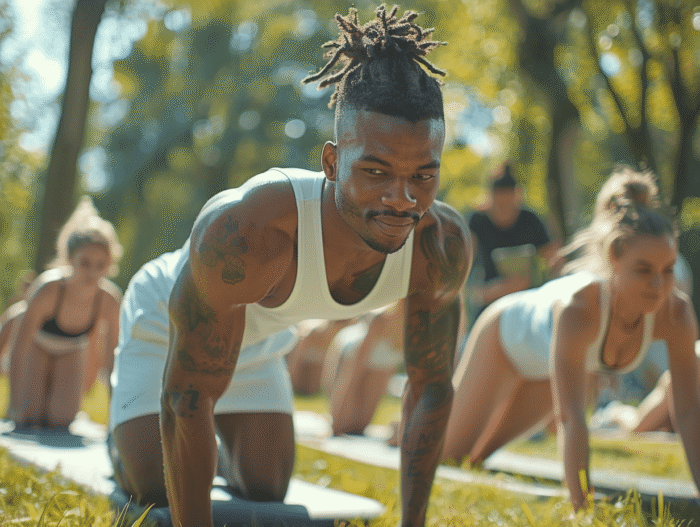
In the field of fitness, calisthenics has become an essential training method for those looking to develop their strength and flexibility with minimal equipment. This discipline, which relies on bodyweight exercises, can be adapted to suit both beginners and seasoned athletes. Calisthenics enthusiasts constantly seek to optimize their routines to maximize gains in strength, endurance, and muscle control. By integrating specific techniques and strategies, it is possible to improve training efficiency and see notable progress, regardless of starting level.
The Fundamentals of Calisthenics to Optimize Your Workouts
Mastering the fundamentals of calisthenics is key to optimizing your workouts, whether you are a novice or a seasoned athlete. This training method, which utilizes bodyweight strength exercises, targets the increase of muscle strength and muscle endurance. Consider calisthenics as an effective way to train your muscles without needing specialized equipment, making it accessible to everyone, wherever you are.
To develop an effective calisthenics program, focus on versatile exercises that stimulate multiple muscle groups simultaneously. Exercises like push-ups, pull-ups, and squats are foundational movements that, by leveraging bodyweight, create optimal conditions for developing strength and physical capacity. The relationships between calisthenics and muscle capabilities are well established: this method trains the muscles, builds strength, and increases muscle endurance.
Consider progressions and variations in your exercises to maintain constant stimulation of your muscles and avoid training plateaus. Adjusting sets, repetitions, and movement intensity should be tailored to your specific goals of muscle mass gain or endurance improvement. Remember that the key to success lies in consistency and perseverance: regular and well-structured training is fundamental to progressing in calisthenics.
Bodyweight Training Strategies for Beginners and Advanced Practitioners
The approach to calisthenics notably differs between beginner practitioners and those at an advanced level, although the common goal remains the improvement of muscle strength and muscle endurance. For novices, the focus is on learning basic movements and establishing a regular routine. Exercises like modified push-ups, assisted pull-ups, and bodyweight squats provide a starting point to build the necessary strength and familiarize oneself with the movement mechanics specific to calisthenics. Progressing gradually is the principle: increase the intensity and complexity of the exercises as your body adapts and your mastery strengthens.
Training for advanced practitioners, on the other hand, focuses on more complex exercises and variations that challenge the body in more significant ways. Muscle-ups, planche dips, or one-arm pull-ups are examples of exercises that require considerable strength and advanced technique. For these athletes, the key to continuing to progress and gain muscle mass is to strategically increase the workload, whether through training volume, reducing rest times, or including explosive and plyometric movements.
Whether you are a beginner or advanced, adjusting the volume and intensity of training is fundamental to stimulating muscle mass gain. Integrate variations and progressive adjustments to maintain muscle overload, thus encouraging muscle growth and performance improvement. Regular practice and continuous adaptation of training routines are essential for anyone looking to progress in street workout and reach new heights in their fitness.