Artificial grass offers an attractive alternative to traditional natural grass, with a lawn that is always green and requires less maintenance. Whether for aesthetic or practical reasons, its installation requires specific expertise to ensure longevity and a pleasing appearance. This begins with careful soil preparation, followed by the proper installation of the covering, and continues with regular maintenance tasks, although less demanding than for natural grass. Mastering these steps is essential to fully enjoy a well-kept and welcoming outdoor space, without the hassle of a lawn that requires constant attention.
Essential Steps for Successful Artificial Grass Installation
Soil Preparation: The first decisive step, soil preparation determines the durability and aesthetics of your synthetic grass. Before rolling out your artificial lawn, ensure that the ground is stable, level, and free of debris. For loose soils, a compaction step is recommended. The installation of a geotextile felt will help prevent weed growth and facilitate drainage.
Installation of Artificial Grass: Azurio, a leading company in the field, emphasizes that the installation must be done with precision. The rolls of grass should be unrolled and adjusted so that the seams are invisible. The fixation of the synthetic grass is done by gluing the rolls at the edges or by using specific pegs, thus keeping the grass in place, especially in synthetic grass gardens or on terraces.
Adaptation to Installation Locations: Whether for a terrace, patio, garden, pool, or spa, each installation location imposes its specificities. The cutting of the grass must be precise to fit perfectly with the configuration of the site, which sometimes involves specific tools, different from the ultimate guide to thermal mowers, which is more suited for natural lawns. The artificial grass is installed in these locations after a thorough study of their exposure to sunlight, rain, and the movement of people or pets.
Maintenance Strategies for a Durable Synthetic Lawn
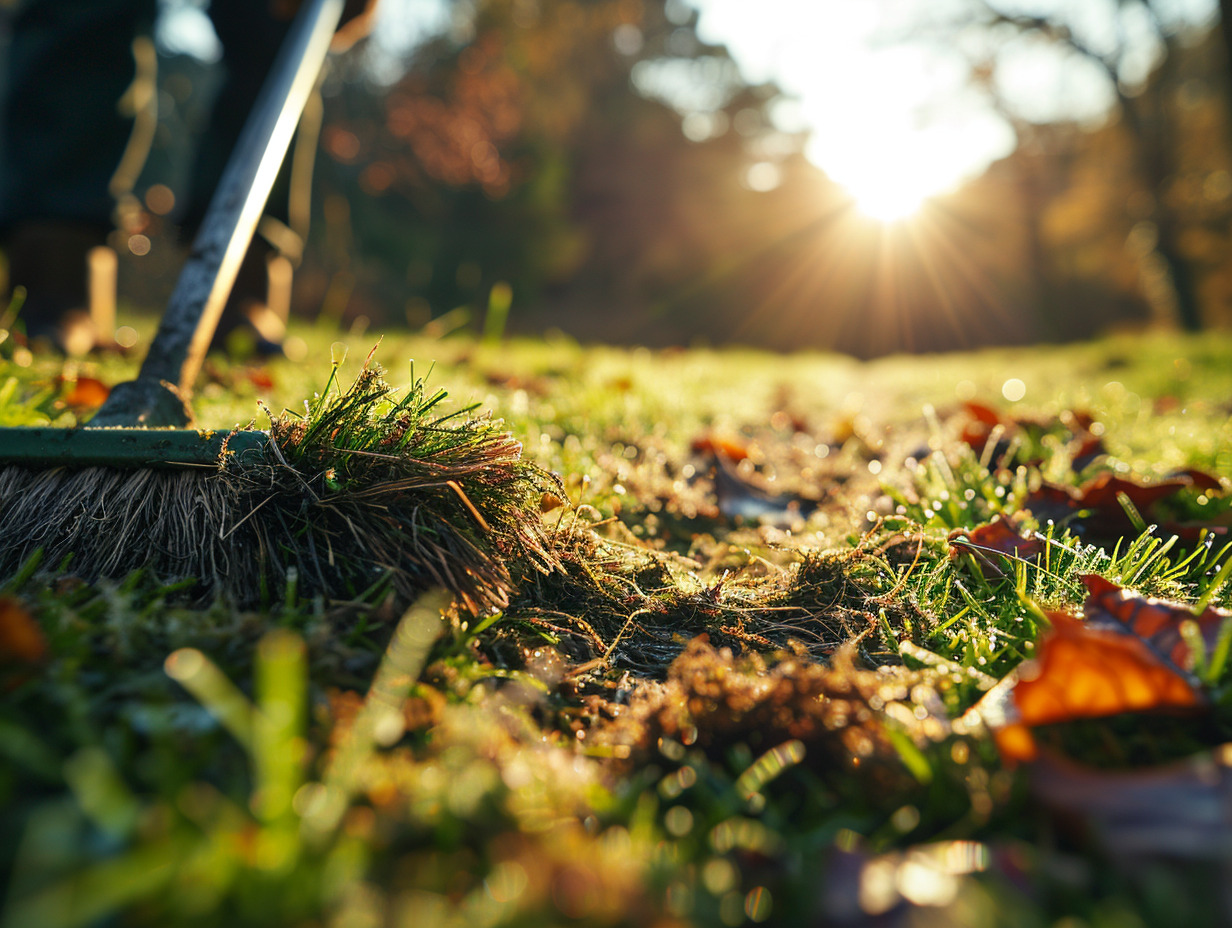
Regular Cleaning: Synthetic grass requires minimal maintenance; however, to maintain its appearance and longevity, regular cleaning is necessary. Use a broom to straighten the fibers and clear the surface of leaves and other natural debris. In case of more significant soiling, such as dog droppings or vomit, a simple soapy water solution will suffice for effective cleaning.
Weed Prevention: Despite the installation of a geotextile felt, unwanted weeds may sometimes break through. Apply an anti-moss treatment and herbicides suitable for artificial grass to prevent and eliminate these intruders without damaging the synthetic fibers.
Protection Against Compaction and Maintenance Issues: Areas with heavy foot or animal traffic are prone to fiber compaction. More pronounced and frequent brushing in these areas helps maintain the uprightness of the blades and avoid a flattened appearance. Good drainage is essential to prevent water stagnation and the problems that arise from it, such as mold formation.
Use of Appropriate Tools and Products: For deeper maintenance, the use of specific tools, such as a pressure washer, can be considered. However, be sure to use an appropriate pressure to avoid damaging the fibers. Maintenance products should be chosen carefully, favoring those specifically designed for synthetic grass to avoid altering its properties or color.