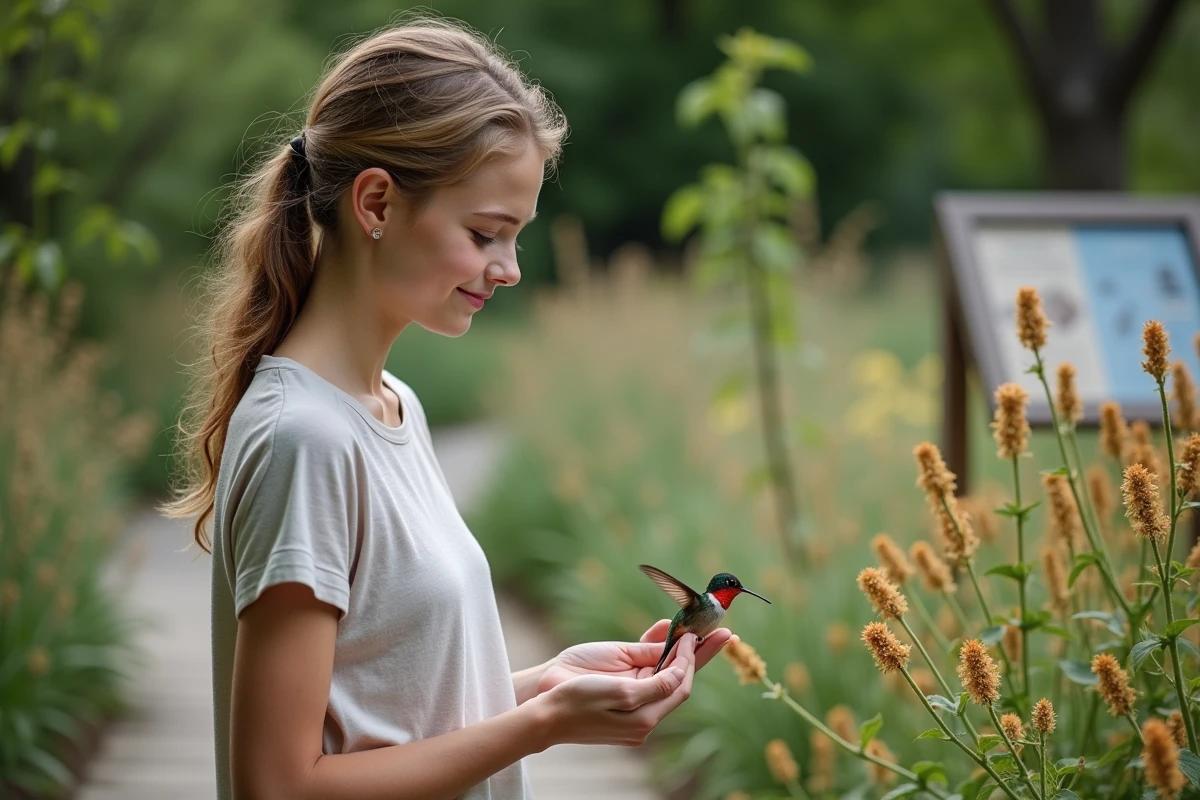
No species of hummingbird is officially indigenous to mainland France. However, hummingbirds are regularly reported, particularly in gardens and greenhouses where certain exotic species are accidentally or intentionally introduced. This presence, often fleeting, raises questions about the adaptation of nectarivorous birds outside their native range. In overseas France, particularly in Guadeloupe, Martinique, and French Guiana, several species of hummingbirds reside permanently. Their distribution mainly depends on the climate, available vegetation, and the preservation of natural environments.
The hummingbird, a concentrated burst of energy with vibrant reflections
It is impossible to ignore this tiny creature that defies the logic of the animal world. Known as the bee hummingbird, the hummingbird fascinates as much with the precision of its movements as with the intensity of its metallic plumage. Its minuscule size, barely five centimeters for some, in no way hinders its feats. In hovering flight, it beats its wings up to eighty times per second, invisible to the naked eye, producing the buzzing sound that signals its presence.
Equipped with a slender and agile beak, it approaches flowers, extracts nectar, and establishes itself, without fanfare, as a discreet yet tireless partner in pollination. In Guiana, Martinique, and Guadeloupe… In these territories, encountering the crowned hummingbird or the Madeira hummingbird is almost commonplace. Their iridescent colors display in full light, both in the city and deep in the forests, reminding us of the vibrancy of tropical life.
Between the bright ruby throat of a male and the more discreet grace of another individual, these birds constantly renew themselves. All tirelessly seek the sweetness of nectar, peck at a few passing insects, and embody the ancient alliance between the animal world and local flora. In every Caribbean or Amazonian ecosystem, their diversity proves nature’s ingenuity in the face of climate and food challenges.
Which species of hummingbirds are actually observed in France and overseas?
If you dream of spotting a wild hummingbird in a garden in mainland France, it’s best to temper your expectations. Their native range extends exclusively across the American continent. Those that are thought to be seen are most often captive individuals that have escaped from greenhouses or farms, or confusions related to similar species. For more on this topic, a comprehensive overview is available here: the hummingbirds present in France.
However, the story takes on a whole new dimension in overseas territories. There, the colorful and rapid dance of hummingbirds animates gardens, forest edges, or vegetation-covered hills daily.
To visualize the species encountered in these areas, here are the main representatives to know:
- Crowned hummingbird: found in Guadeloupe and the Lesser Antilles. Recognizable by its elongated crest and electric green color, it frequents open areas and those close to human habitation.
- Madeira hummingbird: observable in Martinique and Dominica. Larger, with dark plumage leaning towards purple and turquoise, it prefers humid forests and riverbanks.
There are also fleeting appearances, such as that of the rufous hummingbird (Selasphorus rufus) from North America, but these occurrences are accidental, often following an unintentional introduction.
For the patient ornithologist, the most striking experience occurs at dawn: on Creole terraces, in the humidity of tropical paths, simply waiting is enough to observe the tireless back-and-forth of these nectarivores and realize the extraordinary variety of Caribbean or Guiana avifauna.
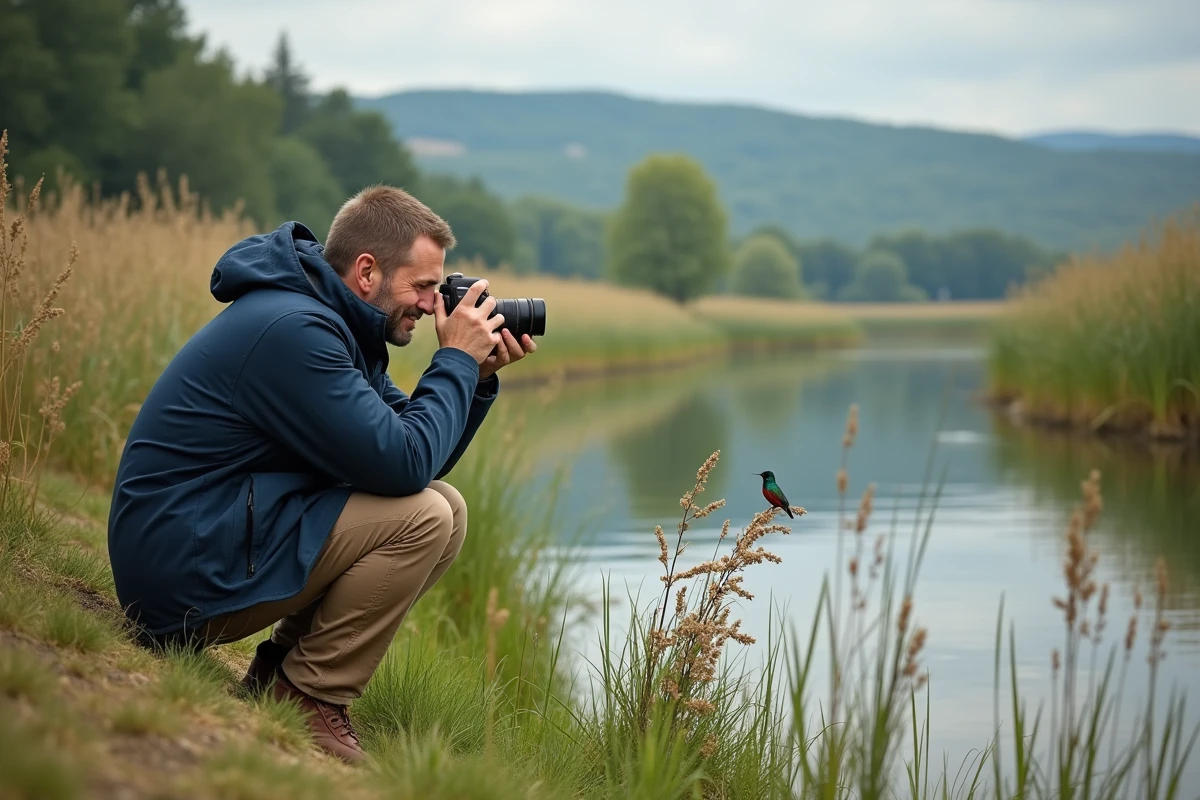
Preserving hummingbirds: small sentinels, big stakes for biodiversity
Watching a hummingbird at work is to glimpse the quiet strength of pollination in action, from a family garden to deep forests. Their beak, finely adapted to each flower, makes them indispensable for the reproduction of endemic plants and the survival of entire ecosystems. Through their comings and goings, they transport pollen grains from one plant to another, thus preserving the delicate web of local flora.
Yet, the survival of these birds is far from guaranteed. Faced with deforestation, urban expansion, or widespread use of pesticides, many are listed on the IUCN Red List. Warning signals are accumulating: even the slightest retreat of forested areas immediately influences the stability of their populations. Several organizations emphasize the urgency of protecting their nesting areas, limiting the use of chemical products, and encouraging respectful coexistence in shared living spaces.
Action pathways revolve around these priorities:
- Pollination: support floral richness, essential for ecological balance.
- Habitat preservation: reduce forest fragmentation and restore natural environments.
- Discreet observation: prioritize contemplation without disturbing these sensitive birds.
Stopping for a few seconds to follow the flight of a hummingbird is to touch the fragile solidity of the living whole. They embody what biodiversity has of most beautiful: tenacity, inventiveness, and the ability to transform each flap of wings into a silent promise.