
Bringing tobacco from Spain to France remains a common practice among cross-border travelers. The thresholds allowed by French customs have not changed for several years, but the fiscal context and controls on the Pyrenean routes are evolving significantly for 2026. What volumes can be transported legally, and what factors are changing the game this year?
Price Gap and Taxation: What Changes on the Spanish Side in 2026
Most online guides limit themselves to the authorized quantities without addressing the main reason for cross-border purchases: the price differential. Spain has historically applied lower taxation on tobacco products than France.
The Spanish government plans a tax increase targeting cigarettes, rolling tobacco, and other combustible tobaccos to reduce the price gap with neighboring countries. This direction, supported by the Spanish Ministry of Finance, aims to align with the average tax levels of the European Union. The savings made by buying in Spain could therefore gradually decrease.
To fully understand the 2026 tobacco regulations in Spain, it is important to keep in mind that customs ceilings remain stable, but the financial gain per carton is tending to decrease.
Maximum Quantities of Tobacco Allowed from a European Union Country
Spain is part of the EU. The applicable thresholds are those defined by European regulations, as adopted by French customs. These volumes correspond to strictly personal use.
| Product | Maximum Quantity |
|---|---|
| Cigarettes | 800 units (4 cartons) |
| Cigarillos (max. 3 g/piece) | 400 units |
| Cigars | 200 units |
| Smoking tobacco (rolling, pipe) | 1 kg |
These ceilings do not automatically accumulate. A traveler carrying cigarettes and rolling tobacco must respect each threshold independently. Customs assesses the personal nature of the quantity by cross-referencing several criteria.
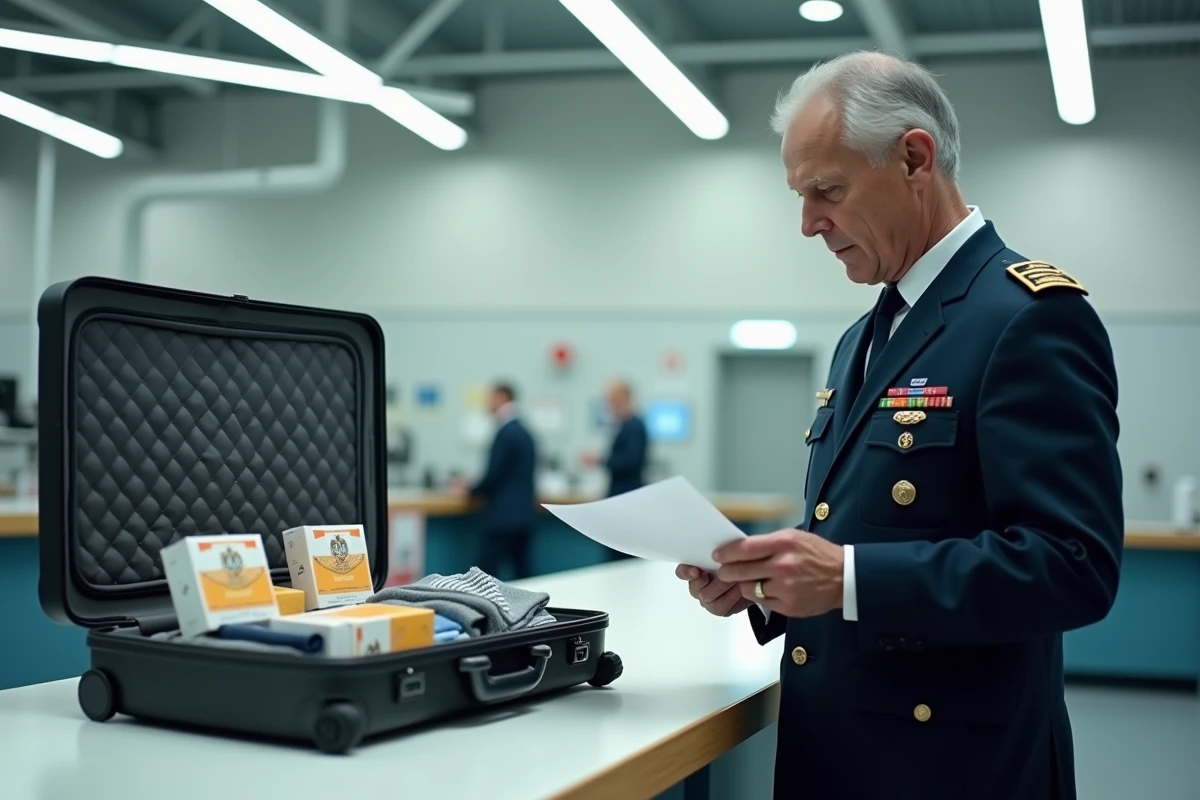
Criteria Used by Customs to Establish Personal Use
The volume transported is not sufficient on its own. Customs agents take into account a range of indicators:
- The commercial status of the transporter (individual or professional) and the frequency of their border crossings
- The place of purchase, mode of transport, and the total quantity brought back compared to indicative thresholds
- The possession of commercial documents (wholesale invoices, delivery notes) that may indicate an intention to resell
- The behavior of the traveler during the inspection and the consistency between the declared volume and their plausible consumption
Beyond the indicative thresholds, the burden of proof of personal use rests on the traveler. If customs believes that the quantities exceed a reasonable use, the products may be seized and penalties applied.
Increased Controls on the Spain-France Routes in 2025-2026
Classic articles on the subject do not mention the recent operational evolution. Since decree n°2024-276 of March 27, 2024, French customs are intensifying targeted road checks on routes coming from Spain. Highways and secondary roads in the Pyrenees are subject to regular operations.
This policy targets small-scale trafficking: individuals who make multiple trips back and forth to resell to their acquaintances. Field reports relayed by local press show a significant increase in these operations since late 2024.
Penalties for Exceeding or Reselling
Reselling tobacco purchased in Spain, even occasionally, constitutes a customs offense. The consequences are graduated:
- Immediate confiscation of all tobacco transported beyond the thresholds
- Fines that can reach one to three times the value of the seized products depending on the severity
- Criminal prosecution in cases where the volume suggests organized trafficking, with the risk of imprisonment
Simply transporting more than four cartons without being able to justify personal use exposes one to seizure. Good faith is not a valid argument before customs if the quantities exceed the regulatory thresholds.
Geographical Areas Not to Be Confused with Mainland Spain
A common mistake concerns territories attached to Spain but excluded from the standard European tax regime. The Canary Islands, Andorra, and certain French overseas collectivities fall under the “other zone” category for customs.
For these territories, the authorized quantities are significantly lower: 200 cigarettes, 100 cigarillos, 50 cigars, or 250 g of smoking tobacco. A traveler returning from the Canary Islands with four cartons is therefore in violation, while the same quantity would be compliant coming from Barcelona or Madrid.

The Spanish fiscal alignment towards the European average, combined with the strengthening of border controls, changes the equation for cross-border buyers. The legal thresholds have not moved, but the price advantage is decreasing and the risk of sanctions is increasing. Checking the authorized quantities by product before each crossing remains the most reliable precaution to avoid an unpleasant surprise at the toll.