Compacting gravel is not just about rolling a roller over a spread surface. The result depends on the type of aggregate, the thickness of the layers, the moisture content, and the equipment used. Each variable modifies the final density, and thus the longevity of the installation. This article measures the impact of these parameters to identify the combinations that work and those that lead to premature settling.
Static or vibratory compaction: performance based on gravel granulation
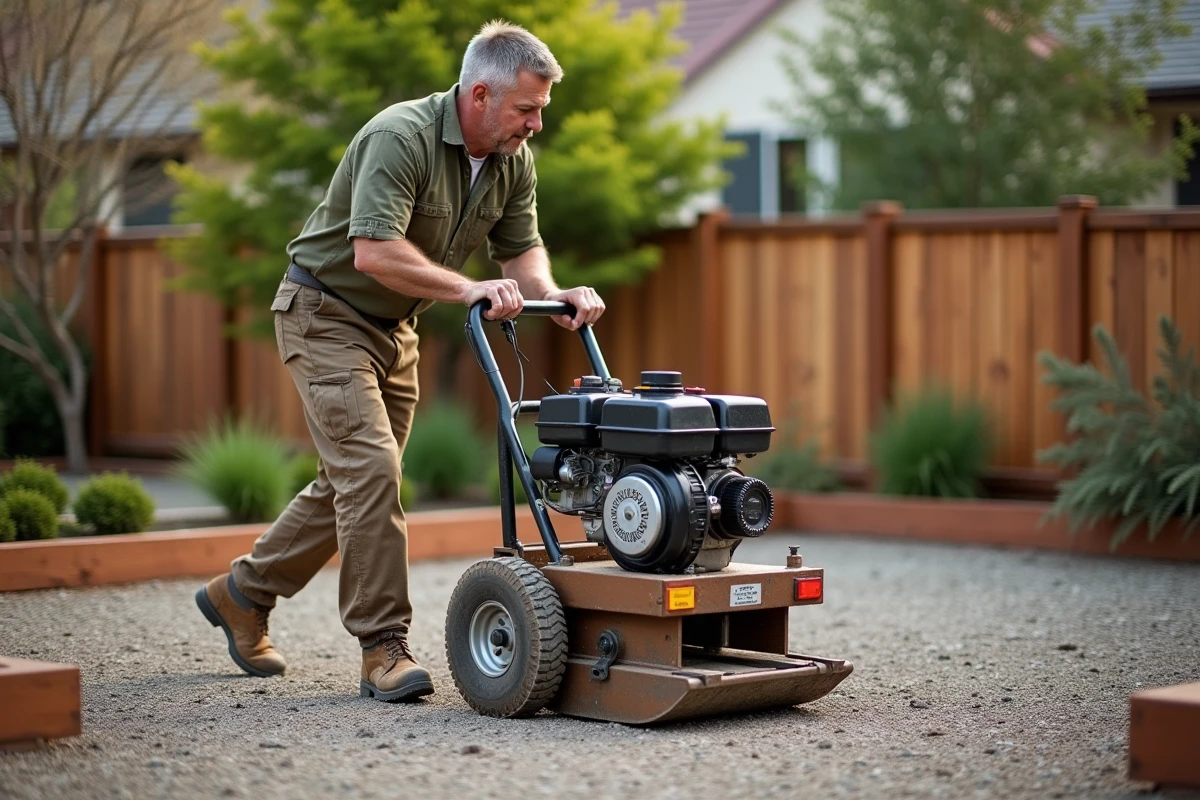
The choice between static compaction and vibratory compaction directly depends on the size of the aggregates. A comparative study by INRAE on permeable installations highlighted the superiority of static compaction for fine gravels (0/6 mm), as it preserves the porosity necessary for water infiltration. Vibratory compaction, on the other hand, closes the voids and reduces soil permeability.
| Criterion | Static Compaction | Vibratory Compaction (vibrating plate) |
|---|---|---|
| Suitable granulation | Fine gravels (0/6 mm) | Medium to coarse gravels (6/20 mm and above) |
| Effect on porosity | Preserves infiltration | Reduces voids |
| Main use | Permeable paths, gardens | Parking lots, high-traffic areas |
| Main risk | Insufficient density on large aggregates | Clogging on fine aggregates |
For a landscaping project intended to manage rainwater, opting for a vibrating plate on fine gravel negates the very purpose of the material. In contrast, on a drivable path made of crushed gravel 10/20 mm, vibration remains the most effective method to achieve stable density.
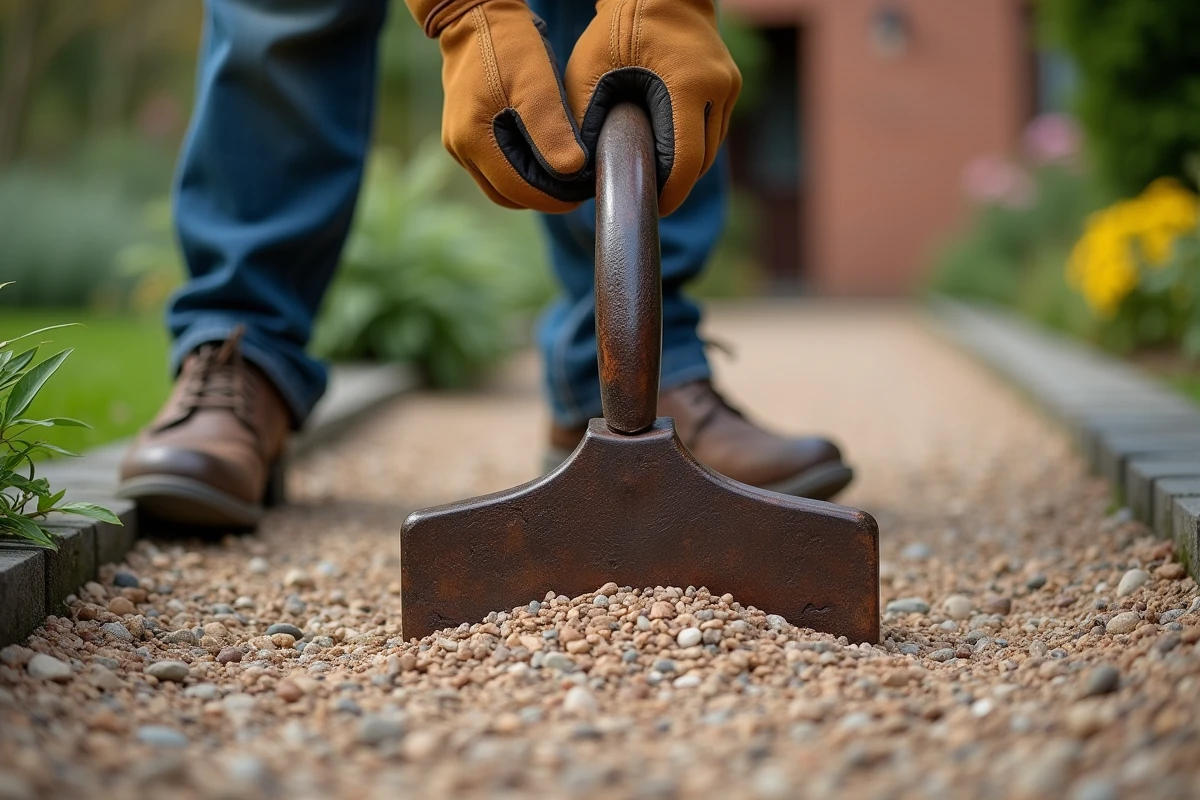
A detailed guide on techniques for compacting gravel allows for choosing the right method according to each terrain and aggregate configuration.
Layer thickness and NF P 98-190 standard: the rule not to ignore
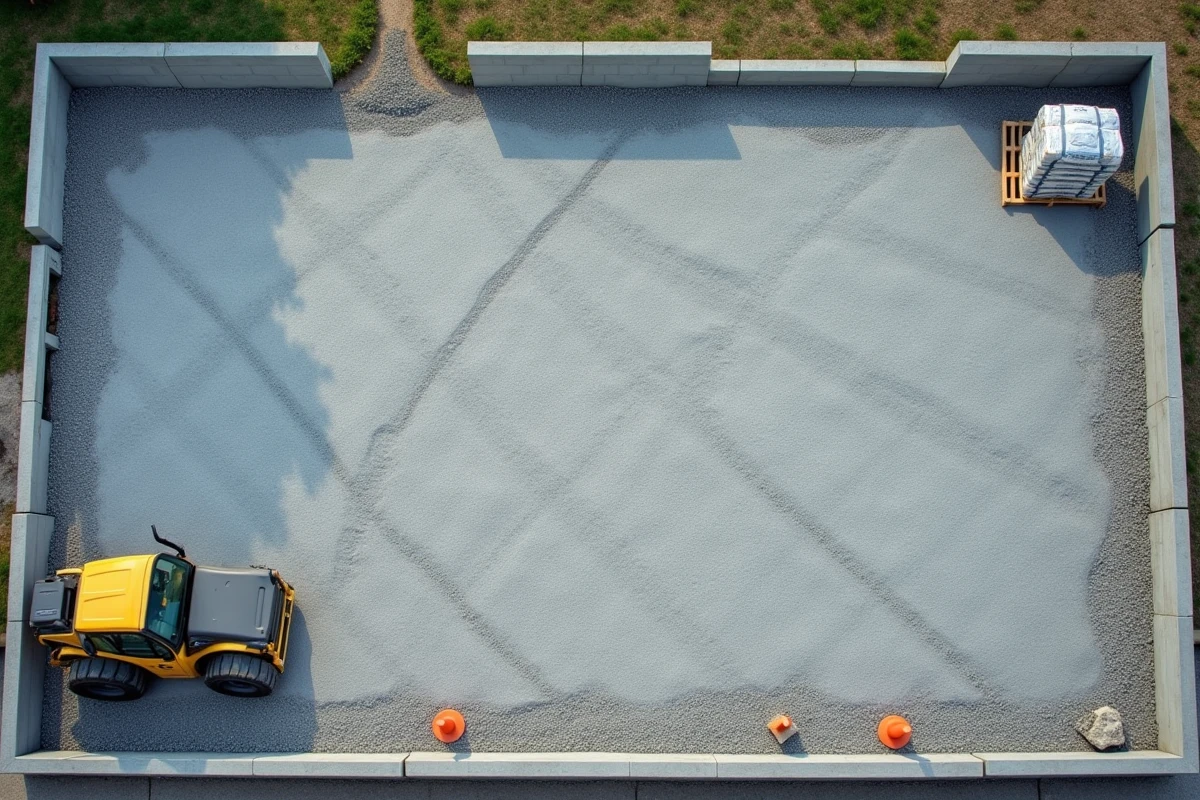
The NF P 98-190 standard, updated in March 2026, now requires compaction in successive layers of 15 to 20 cm maximum for non-road landscaping. This constraint aims to ensure the long-term stability of the fill.
Spreading 40 cm of gravel in a single pass and then compacting the surface only produces a hard crust on an unstable mattress. The lower layers remain loose and compact under the weight of vehicles or simply with freeze-thaw cycles.
Why adhering to this thickness changes the result
Each layer compacted individually transmits the load evenly to the next layer. Below 15 cm, the compaction effort is disproportionate to the gain. Beyond 20 cm, the vibrating plate or compactor does not penetrate deeply enough to densify the bottom of the layer.
- Excavate the ground to the desired total depth, then fill in regular layers of 15 to 20 cm
- Compact each layer before adding the next, making several crossed passes
- Check the flatness between each layer with a level or a mason’s rule to avoid depressions that collect water
Layer-by-layer compaction doubles the installation time but significantly reduces the risk of settling over the lifespan of the installation.
Limestone gravel in humid climates: a common pitfall on construction sites
Feedback shared by professionals on the Building Techniques forum in April 2026 reported a significant increase in compaction failures with unwashed limestone gravels in humid climates. The fine particles present in unwashed limestone form a sludge that prevents the aggregates from locking together.
The problem does not appear immediately. The compaction seems correct on the surface, but after a few weeks of rain, the gravel shifts and ruts form. Pre-washing the limestone gravel removes these fines and allows for proper mechanical locking between the aggregates.
Alternatives to limestone in rainy areas
Granite or basalt gravel offers better resistance to fragmentation under compaction. These materials generate fewer fines during the passage of the vibrating plate, which maintains the granular structure after compaction.
If limestone remains the only locally available material, using washed limestone and compacting with controlled moisture content helps to limit the phenomenon. Lightly watering before compaction helps the aggregates to settle, but excess water produces the opposite effect by lubricating the contacts.
Electric vibrating plates: a viable option for residential compaction
The French Public Works Association (AFTP) documented in January 2026 a trend towards the adoption of electric vibrating plates in residential areas. These machines reduce noise pollution and eliminate local emissions, two criteria that had previously weighed against mechanical compaction in inhabited areas.
Current electric models achieve compaction performance comparable to thermal models on thicknesses compliant with the standard (15 to 20 cm). Their autonomy remains the main limiting factor for large construction sites, but for a garden path or a parking area of a few dozen square meters, the battery capacity is more than sufficient.
- Significantly lower noise level than thermal models, allowing for daytime work without neighborhood conflicts
- No fuel to store or engine maintenance, simplifying rental for individuals
- Weight and size similar to thermal plates of the same category
The compaction of a gravel installation hinges on three decisions made even before laying the first aggregate: the choice of material suitable for the local climate, adherence to a layer thickness compliant with the NF P 98-190 standard, and the selection of a compaction method consistent with the granulation. Neglecting any one of these parameters is enough to compromise the stability of the whole, regardless of the care taken with the finishes.