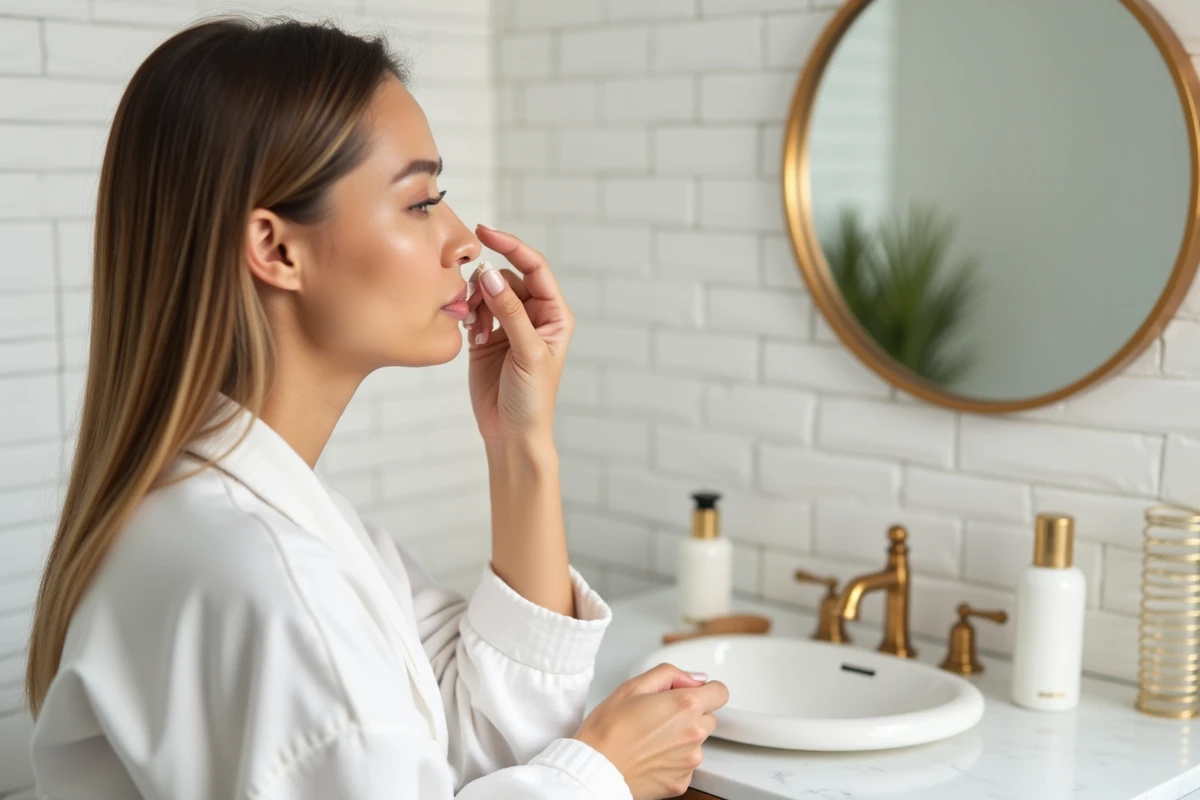
The facial and body care market is undergoing a rapid restructuring. AI-powered skin analysis applications, widely adopted by 18-35 year-olds since 2025 according to Euromonitor International, are pushing beauty routines towards fine personalization. At the same time, Regulation (EU) 2026/452 from the European Commission strengthens the framework for cosmetic claims. In this context, everyday beauty tips deserve closer examination than the usual lists of gestures.
Topical Probiotics and Skin Microbiome: What Dermatologists Say
Dermatologists report a notable improvement in radiance among users of topical probiotics applied daily. These formulations act on the skin microbiome, the bacterial flora that protects the skin barrier. The goal is not to “nourish” the skin in the classical sense, but to rebalance an ecosystem disrupted by urban pollution and stress.
Field reports vary on this point: some professionals observe a significant reduction in inflammation within a few weeks, while others caution that results depend heavily on the type of probiotic strains used. The subject remains young, and the available data does not allow for a conclusion on universal efficacy.
What stands out, however, is that the microbiome approach disrupts the traditional logic of facial care. Rather than accumulating serum, cream, and mask, the priority is to restore a favorable environment, including for those prone to breakouts or redness.
To delve deeper into this targeted care logic and discover other concrete avenues, the beauty tips on Belle et Épanouie cover several routines tailored to different skin profiles.

Minimalist Routine or Multilayer Routine: A Choice That Changes the Skin
In Japan, the trend called “skinimalism” has been gaining ground since late 2025. The principle: fewer than three products for better hydration and visible radiance. This approach contrasts with Western routines, often composed of five to eight steps (cleanser, toner, serum, day cream, sunscreen, sometimes a specific milk or soap).
The February 2026 article from Nikkei Asia documents this phenomenon and highlights a paradox. Skin subjected to fewer products shows, in reported observations, a more stable skin barrier. The multiplication of products can weaken the hydrolipidic film, especially when formulations contain powerful actives used simultaneously.
How to Decide Between the Two Approaches
The choice depends on skin type and environment. A combination skin exposed to polluted urban air will not react the same way as dry skin in a temperate climate. Standardized advice (“apply a serum then a cream”) ignores this variable.
- For oily or acne-prone skin, a gentle cleanser and a light moisturizing treatment are often sufficient to maintain radiance without overloading the pores.
- For dry skin, a rich natural product (shea butter, vegetable oil) applied on damp skin can replace the layering of serum plus cream.
- For sensitive skin, reducing the number of products decreases the risk of cross-reaction between actives.
The question is not about following a trend, but about testing a gradual simplification over three to four weeks and observing the results on the face and body.
Hormonal Cycles and Skin Radiance: An Underexplored Angle
Standardized beauty routines overlook a determining factor: hormonal variations throughout the menstrual cycle. The skin does not react the same way in the follicular phase (after menstruation) and in the luteal phase (before menstruation).
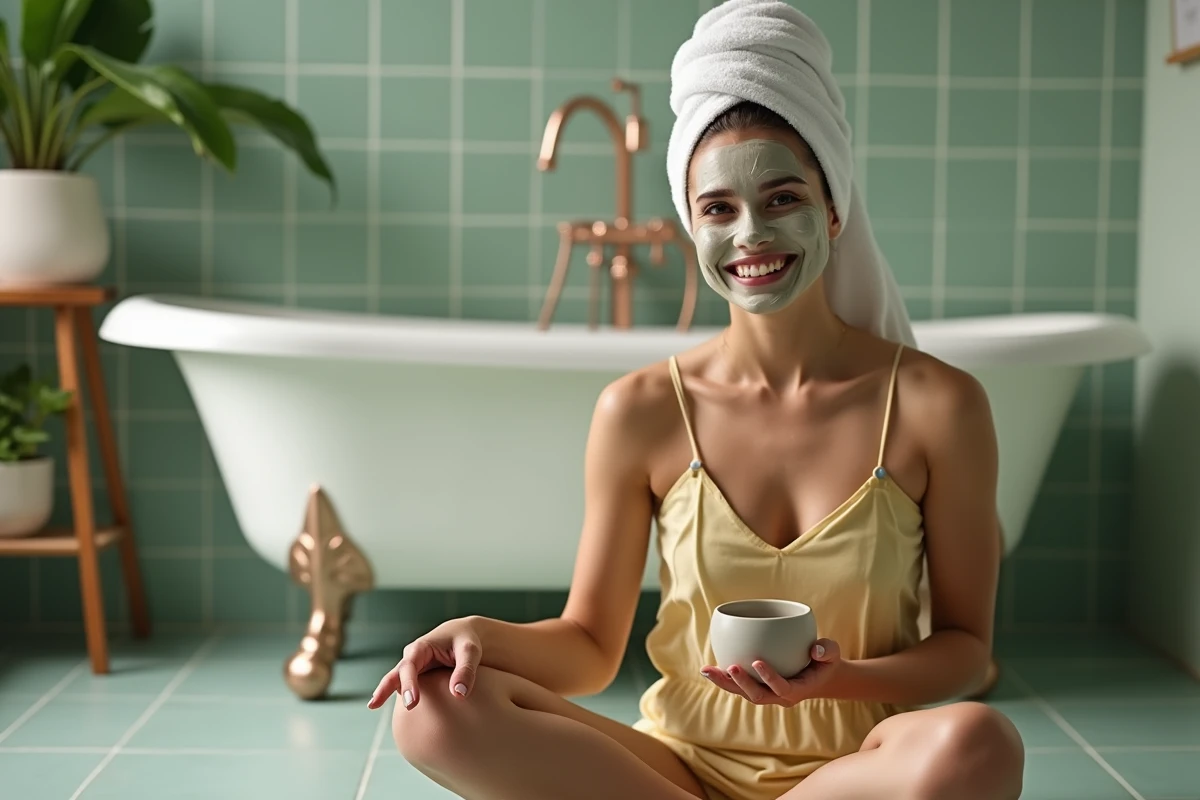
In the follicular phase, estrogen levels rise, promoting collagen production and naturally giving a brighter complexion. This is the time when a light treatment, a spot hydrating mask, or a simple gentle scrub can amplify this natural radiance.
In the luteal phase, progesterone dominates and stimulates sebum production. Breakouts appear more easily, and the complexion may seem duller. Adapting facial care to this phase reduces inflammation and limits the need for heavy corrective products. A more purifying cleanser and a natural mattifying treatment then take over.
Why Brands Are Starting to Take an Interest
Some natural cosmetic brands now offer protocols segmented by phase of the cycle. Clinical data remains limited, but user feedback shows a real interest in this approach. It aligns with the personalization logic driven by AI skin analysis tools, which increasingly incorporate more individual parameters into their recommendations.
European Regulation and Beauty Claims: What Changes in 2026
Regulation (EU) 2026/452 imposes new constraints on brands claiming an “illuminating,” “anti-imperfection,” or “healthy glow” effect on their products. Claims must now be based on documented and verifiable evidence.
For consumers, this means that marketing mentions on packaging become more reliable than before. A product that claims “natural glow” without basis is subject to sanctions. However, this regulation does not cover beauty advice disseminated online, which remains a space where unverified promises circulate freely.
- Checking the INCI list (composition) remains the most concrete action to evaluate a facial or body care product.
- Favoring products with recognized certification (Cosmos, Ecocert) provides a first quality filter on natural ingredients.
- Beware of formulations that list a star active ingredient in very low concentration, buried among filler ingredients.
Everyday radiance does not depend on a miracle product or a fixed routine. It relies on understanding one’s own skin, its variations, and choosing treatments whose composition genuinely justifies the promises. The European regulatory framework pushes in this direction, and personalization tools make this work more accessible than ever.