In French, the words “chute” and “cascade” are often used interchangeably to describe a mass of water descending a slope. Recent toponymic databases and geomorphological classifications show that these two terms cover distinct physical realities. What in the relief form, the behavior of the water, or the elevation change allows us to separate them?
Geomorphological Typology of Falls and Cascades
English classifications, particularly that of the US National Park Service (updated in 2023), detail several types of waterfalls. This framework helps to understand why French has two words where English uses more.
| English Type | Water Behavior | Usual French Equivalent |
|---|---|---|
| Plunge | The water detaches from the wall and falls vertically into the void | Chute |
| Vertical falls | Almost vertical column of water, minimal contact with the rock | Chute |
| Horsetail | Stream of water remaining attached to the rock throughout the descent | Chute (variant) |
| Cascades | Succession of small steps, water bounces from one ledge to another | Cascade |
| Tiered / stepped falls | Clearly marked ledges with intermediate basins | Cascade à paliers |
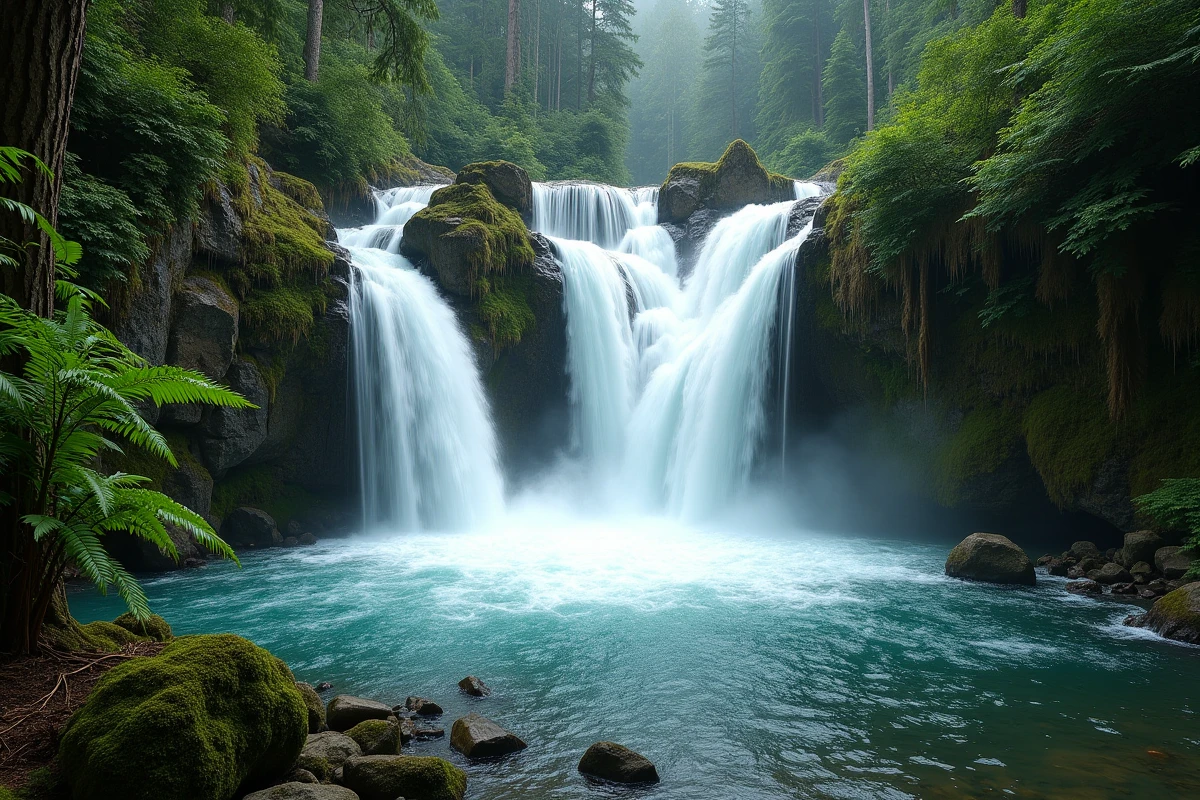
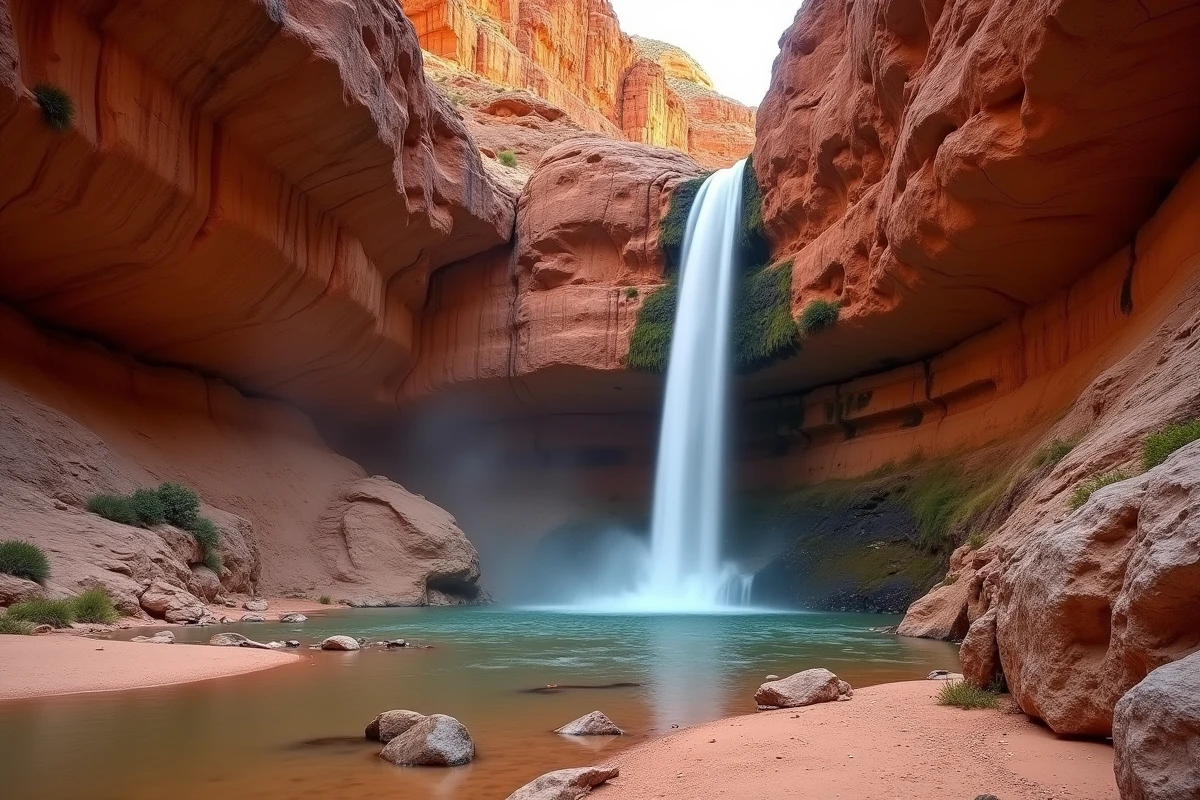
The chute corresponds to a vertical or nearly vertical descent, where the water loses contact with the rock. The cascade, on the other hand, refers to a flow that remains in contact with the rocky substrate, progressing through successive steps.
To delve deeper into the difference between chute and cascade, one must also look at how official inventories treat these terms in their databases.
Toponymic Registers: Falls and Cascades as Distinct Entities
National geographic databases do not treat these two words as synonyms. The Quebec Toponymy Register, updated in 2022, classifies “chute” and “cascade” as types of separate hydrographic entities. The criteria used focus on total elevation change and the continuity of the flow.
In France, the BD TOPO of the IGN lists rivers and their relief features. The distinction is less formalized there, but the vocabulary used in the descriptive sheets reflects the same logic: a chute implies a sharp break in the profile, while a cascade suggests a rugged slope over a longer distance.
What These Registers Reveal About Common Usage
The fact that mapping organizations use measurable criteria (elevation change, continuity of water-rock contact) shows that the distinction is not merely aesthetic. Elevation change alone is not enough to decide: a fall of a few meters remains a fall if the water detaches from the rock, while a cascade can cover a much greater elevation change by spreading over several ledges.
Concrete Criteria for Identifying a Fall or a Cascade in the Field
On a hike or while observing a photo, a few visual clues can help to quickly distinguish between the two.
- Contact with the rock: if the water falls in a free curtain without touching the wall for most of the descent, it is a fall (plunge type). If it flows, bounces, or splits into streams along the rock, it is a cascade.
- Number of ledges: a single vertical drop points to a fall. Two or more visible ledges with intermediate basins point to a cascade (tiered or stepped falls type).
- Shape of the receiving basin: a plunge-type fall often carves a deep basin at its base due to the impact. A cascade distributes energy along its entire length, resulting in less pronounced basins.
- Sound: a vertical fall generates a deep and concentrated rumble. A cascade produces a more diffuse sound, spread over several impact points.
Hybrid Cases and the Limits of the Fall-Cascade Distinction
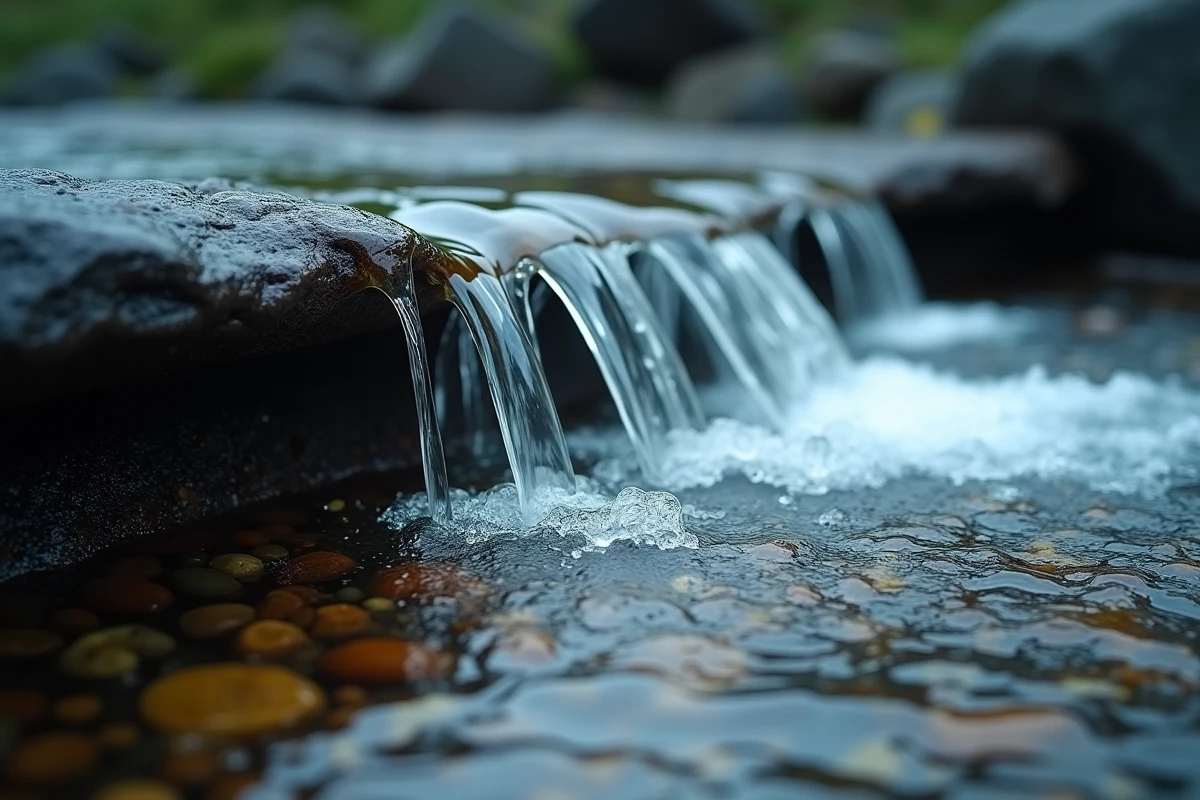
Many natural formations do not fit perfectly into either category. The horsetail type, for example, describes a stream of water that remains attached to the wall without a real drop: neither a vertical plunge nor a tiered cascade. In French, “chute” is often used in this case, but the behavior of the water resembles more a flow than a free fall.
The Victoria Falls in Southern Africa illustrate this ambiguity well. The curtain of water falls into a narrow gorge across the entire width of the Zambezi River. The descent is vertical (fall criterion), but the width and the constant mist give an impression of a giant cascade. The geological context shapes perception as much as the physics of the water.
Why French Maintains the Confusion
In English, “waterfall” serves as a generic term, and the subtypes (plunge, cascade, tiered) specify the morphology. In French, “chute d’eau” plays this generic role, but “cascade” is also used as a common synonym. The result is that the two words coexist without a clear hierarchy in everyday usage, while geomorphology assigns them distinct meanings.
Angel Falls in Venezuela, with its column of water detaching from the cliff at a considerable height, corresponds to the plunge type in its purest form. The Plitvice Lakes in Croatia, with their dozens of limestone ledges, embody the tiered cascade. Between these two extremes, nature produces a continuous spectrum that words imperfectly delineate.
The most reliable distinction remains that of water-rock contact: water that falls freely is a fall, while water that descends in steps while touching the rock is a cascade. This simple criterion, derived from geomorphological classifications, works in the vast majority of cases, even when local usage blurs the labels.