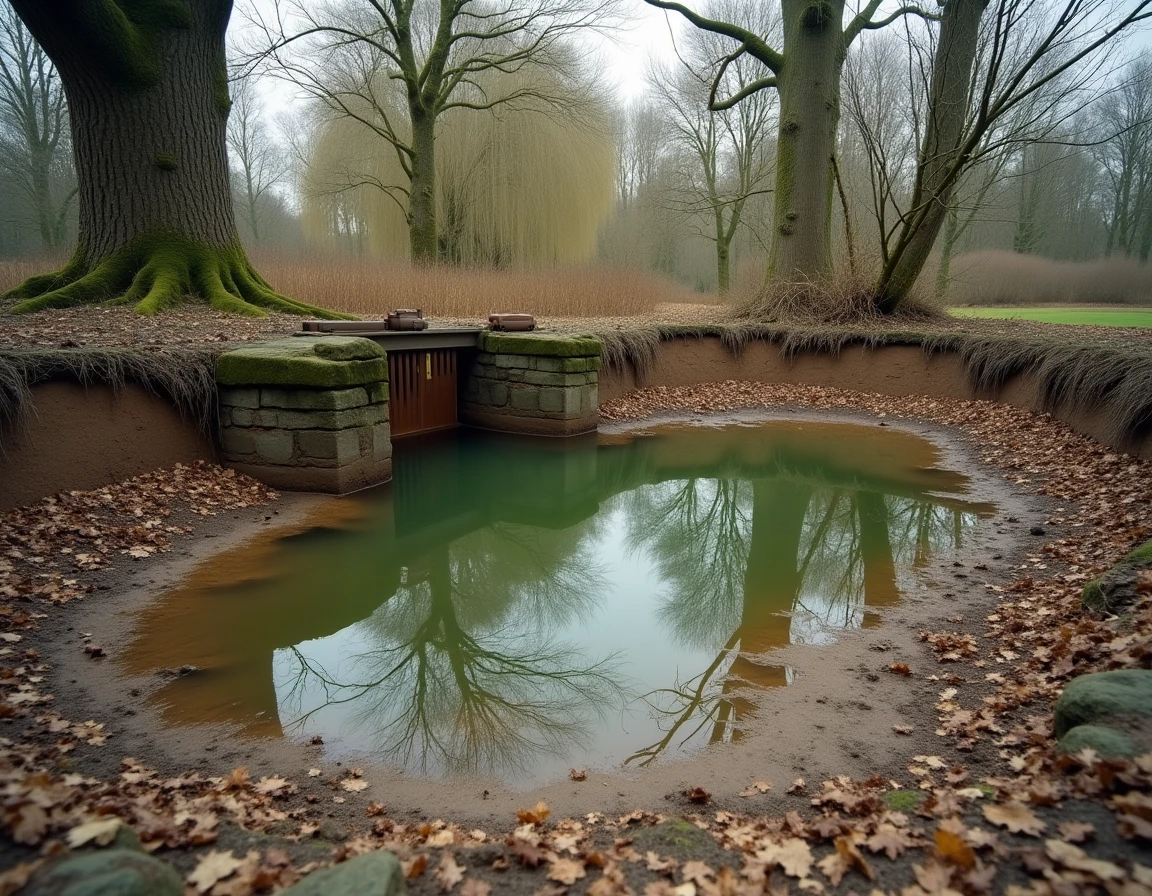
A pond left to itself for several years eventually fills with silt, becomes overgrown with vegetation, and loses all function. Refilling it with water is not just a matter of opening a valve or pumping water in. Even before touching the land, you need to understand what environmental regulations expect from you, as the rules have changed.
Refilling a pond and water law: the legal trap to anticipate

Do you simply think you are restoring an existing body of water on your property? The services of the DDT (Departmental Directorate of Territories) may see things differently. Several departmental directions now consider that an abandoned pond that is refilled with water is legally equivalent to a creation or substantial modification of a body of water.
In practical terms, this means you must go through the water law regime as provided by the environmental code. Depending on the area, there are two scenarios: a declaration for moderately sized bodies of water, or an authorization for larger ones. The reactivation of a dam or the modification of the water supply from a stream almost systematically triggers this obligation.
The first reflex should be to contact the water police in your department. This service processes the files and will indicate whether your project falls under a simple declaration of existence or a more complex procedure. Before consulting an earthmover, it is useful to refill a pond with Immobilier du Net to understand the legal steps specific to each situation.
Site assessment: evaluate the actual state of the pond before work
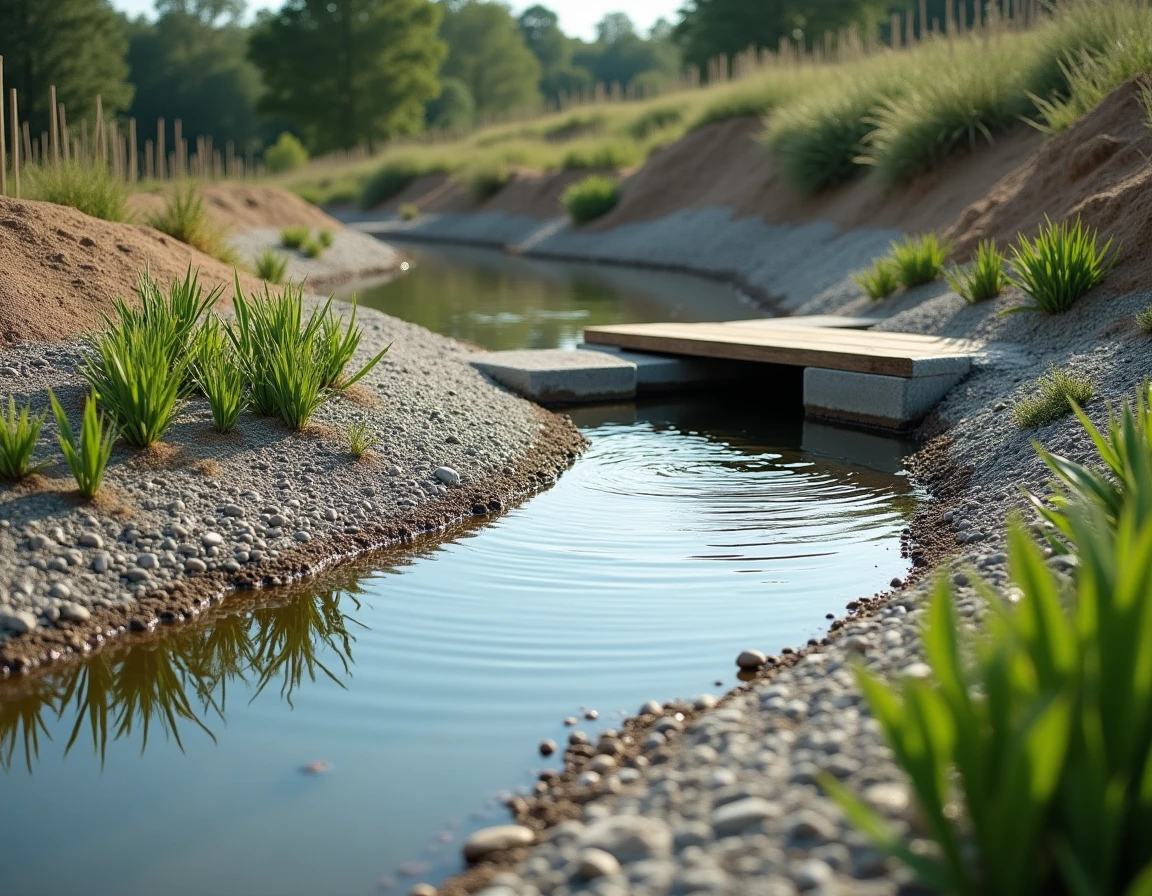
An abandoned pond no longer resembles a pond. It looks like a wet meadow, a marshy wood, or a silted basin. Before planning anything, you need to assess three concrete elements.
The thickness of accumulated silt
Silt is the result of eutrophication: years of accumulation of organic matter, nitrogen, and phosphorus. In a long-neglected pond, this layer can occupy a significant portion of the initial volume. A probing with a pole or auger allows for estimating this thickness. If it is too significant, mechanical dredging will be essential before any refilling.
The condition of hydraulic structures
Dike, weir, drainage pipe, spillway: these structures are the technical skeleton of the pond. A cracked dike or one burrowed by nutria will not hold water. A broken concrete weir will no longer regulate the level. Each structure must be inspected, and their restoration conditions the feasibility of the project.
The water supply
Where did the water originally come from? Spring, stream, shallow aquifer, runoff from the watershed? If the pond was fed by a stream, regulations on ecological continuity apply. Environmental services check that the body of water does not obstruct the movement of fish and sediments.
Wetland or body of water: what environmental services prefer
You may have noticed that your abandoned pond now hosts frogs, dragonflies, or wetland plants. This is not trivial. The recent trend of local biodiversity policies encourages prioritizing wetland restoration over the classic refilling of former deep and artificial bodies of water.
The Green and Blue Framework, an ecological planning tool, promotes temporary ponds and open wetlands. They are considered more favorable to wildlife than deep ponds with steep banks. If your pond is located within a Natura 2000 area or in the watershed of a classified stream, this orientation will weigh in the processing of your file.
This point does not mean that refilling is impossible. It means that you will need to demonstrate that your project is compatible with local environmental objectives, outlined in the SDAGE (Master Plan for Water Development and Management) and the SAGE of your basin.
Concrete steps to refill a pond legally
Once the diagnosis is made and the regulatory framework clarified, the work follows a logical order. Skipping steps exposes you to administrative penalties or an unnecessary project.
- Submit a declaration or request for authorization under the water law to the DDT, attaching a situational plan, a description of the structures, and an impact assessment on the environment
- Have the silt dredged by suitable machinery during low water periods (late summer or autumn), and plan the disposal site for the extracted sediments
- Repair or rebuild the dike and drainage structures, following the technical specifications imposed by the prefectural order
- Install a level regulation device (weir or spillway) that allows periodic drainage, mandatory for bodies of water subject to declaration
- Refill gradually, monitoring the tightness of the dike and the behavior of the structures during the first weeks
Regular drainage, generally every two to five years according to local prescriptions, is part of the owner’s obligations. It allows for controlling siltation, managing fish populations, and checking the condition of the structures.
Cost and support: who to contact
The cost of refilling varies significantly depending on the state of the pond, its area, and the extent of work on the structures. Dredging often represents the heaviest expense.
Several contacts can assist you in the process:
- The agricultural chamber of your department, which sometimes offers technical support for pond owners
- The local fishing federation, competent in fish management and obligations related to fishing rights
- An environmental consulting firm, if the water law file requires an impact assessment
Before signing a quote with an earthmoving company, ensure you have obtained the receipt of declaration or the authorization order. Starting work without this document exposes you to a restoration imposed by the administration, at the owner’s expense. The legal framework for ponds in France remains strict, and ignorance of these rules is the primary cause of blockage in refilling projects.